

Seeing wildlife while trekking can be one of the most memorable parts of being outdoors.
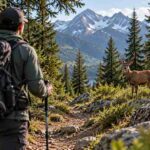
A deer appearing between the trees, monkeys moving through the canopy, birds calling from the trail, or even spotting a larger animal in the distance can make a trek feel completely different from an ordinary walk.
But there’s an important distinction between seeing wildlife and interacting with wildlife.
Wild animals aren’t there for our entertainment. The best encounter is usually one where the animal can continue behaving naturally without realizing that a group of people is watching it.
Here’s how to trek responsibly when wildlife is around.
Give Animals More Space Than You Think They Need
The most important rule is simple:
If an animal changes its behavior because of your presence, you’re probably too close.
An animal becoming alert, stopping what it was doing, repeatedly looking toward you, moving away, making warning sounds, or changing direction can all be signs that you’re affecting it.
Don’t wait for the animal to become aggressive before creating distance.
Slowly move away and give it a clear path to leave.
The appropriate distance varies enormously between species and situations, so don’t rely on one fixed number. A small bird and a large wild mammal have completely different needs.
When in doubt, give the animal more room.
Never Approach Wildlife for a Better Photograph
It’s tempting to move closer when you spot an animal and realize your phone camera isn’t capturing it properly.
Don’t.
Zoom in instead.
A photograph isn’t worth causing an animal to abandon food, shelter, a resting place, or its young.
This is especially important during nesting or breeding periods, when animals may be particularly sensitive to disturbance.
If an animal is moving away from you, don’t follow it.
Let it go.
Never Feed Wild Animals
Feeding wildlife may seem harmless, particularly when an animal appears comfortable around humans.
It’s not.
Animals that learn to associate people with food can become dependent on human-provided food or begin approaching campsites, roads, and hikers.
That can create dangerous encounters and may ultimately result in animals being removed or harmed.
Food can also be nutritionally inappropriate for wildlife.
Keep your own food securely stored and never deliberately offer food to an animal.
Even tossing a small piece of fruit toward a monkey or bird teaches the wrong lesson.
Don’t Block an Animal’s Route
Imagine walking along a narrow trail and seeing an animal ahead.
Your instinct might be to stop and watch.
That’s fine if you’re far enough away.
But don’t position yourself between the animal and where it appears to be trying to go.
Animals may need access to water, food, shelter, or a familiar route through their habitat.
If an animal is approaching from one direction, step aside and give it a clear path.
This is particularly important on narrow trails where there may be limited room to pass.
Keep Your Group Quiet
Noise can disturb wildlife long before you actually see it.
Loud conversations, shouting, music, and sudden noises can cause animals to move away from an area.
You don’t need to walk silently.
Normal conversation is generally enough for a typical trek, while keeping your volume reasonable is more respectful to both wildlife and other hikers.
If you’re specifically hoping to observe animals, slowing down and paying attention to natural sounds is often more rewarding than making more noise.
You may hear an animal long before you see it.
Keep Dogs Under Control
If you’re trekking with a dog, check the rules before entering the area.
Some trails and protected areas don’t allow dogs at all. Where dogs are permitted, keeping them under control is important.
A dog chasing wildlife can cause considerable stress and can put both the animal and the dog in danger.
Never allow your dog to chase, corner, or approach wild animals.
Remember that an animal that looks harmless may still defend itself if it feels threatened.
Don’t Disturb Nests, Dens or Young Animals
Young animals can be particularly tempting to photograph.
If you find a nest, den, burrow, or young animal that appears to be alone, leave it alone.
The parent may be nearby.
Picking up, touching, calling to, or approaching a young animal can create unnecessary stress and may interfere with the animal’s natural behavior.
The same principle applies to eggs, nests, dens, and other signs of animal activity.
Observe from a distance and keep moving.
What If an Animal Appears on the Trail?
This is where things become more practical.
Don’t immediately run toward it or away from it.
Stop and assess the situation.
Ask yourself:
What species is it?
How far away is it?
Has it noticed me?
Does it have a clear route away?
Am I between the animal and something it needs?
If you aren’t sure what to do, increase your distance and follow the wildlife guidance for that particular area.
Don’t rely on advice you’ve heard about one species and apply it to another.
A monkey, wild boar, bear, elephant, snake, deer, and large cat can all require very different responses.
Don’t Assume a Quiet Animal Is a Safe Animal
Wildlife doesn’t need to appear aggressive to be uncomfortable.
An animal standing still, staring at you, repeatedly vocalizing, or refusing to move may already be reacting to your presence.
Likewise, an apparently calm animal can react quickly if it feels cornered.
Never attempt to touch or approach wildlife simply because it doesn’t immediately run away.
Wild animals are unpredictable precisely because they’re not domesticated.
Keep Food and Waste Away From Wildlife
Wildlife disturbance doesn’t only happen when you’re walking.
Your campsite can also create problems.
Food scraps, open rubbish, strong-smelling leftovers, and improperly stored food can attract animals.
Once animals learn that campsites provide easy meals, they may begin returning.
Store food properly, clean up after meals, and take your rubbish with you.
A clean campsite isn’t just more pleasant for the next trekker. It helps prevent wildlife from developing unhealthy associations with humans.
Follow Local Wildlife Rules
General principles are useful, but local rules matter more.
National parks, wildlife reserves, forests, and protected areas may have specific requirements regarding:
- Minimum viewing distances
- Seasonal closures
- Dogs
- Camping
- Food storage
- Photography
- Drones
- Trail access
- Wildlife encounters
Read the regulations before your trek.
If a park ranger or local authority gives you instructions during an encounter, follow them.
Local knowledge matters because the wildlife, terrain, and risks vary from one place to another.
Let the Wildlife Have the Last Word
One of the best habits you can develop as a trekker is learning when to walk away.
You don’t need the perfect photograph.
You don’t need to get closer.
You don’t need to make the animal stay.
If a bird flies away, let it fly.
If a deer moves into the forest, let it disappear.
If an animal blocks the trail, give it time and space rather than trying to force the situation.
The privilege of trekking through natural environments comes with a responsibility to minimize our impact on them.
A successful wildlife encounter isn’t one where you get as close as possible.
It’s one where the animal continues its day as if you were never there.