
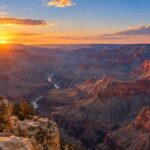

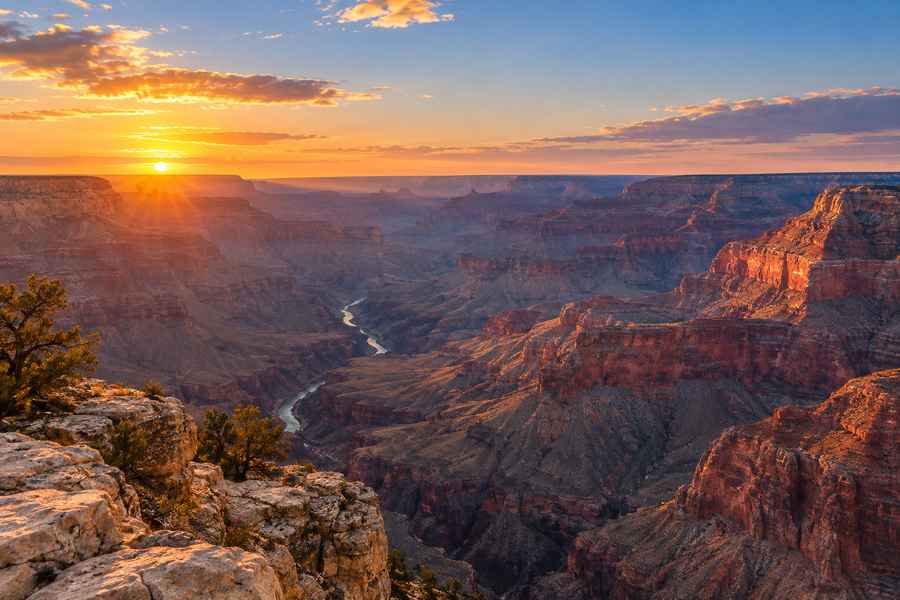
There are places you can understand from a photograph, and then there are places that make you realize how limited a photograph really is. The Grand Canyon is one of the latter. You can spend weeks looking at pictures before your trip, but standing at the rim for the first time is still difficult to process. The canyon is simply too large. It doesn’t look like one enormous landscape so much as an entire world carved into the earth, with layers of rock, distant ridges, deep side canyons and changing shadows stretching farther than you can easily take in.
The Morning Starts With the Light
A day at the Grand Canyon often begins earlier than expected. The first few hours of the morning are among the most comfortable, particularly if you plan to hike, and the softer light gives the canyon a completely different appearance. At sunrise, the walls don’t suddenly become bright all at once. Light gradually moves across the landscape, revealing ridges and formations that were almost invisible moments earlier.
The temperature is another reason to appreciate the morning. Conditions at the rim can be relatively cool while the deeper parts of the canyon become considerably warmer later in the day. If you’re planning to walk below the rim, those early hours aren’t just beautiful; they can also make the physical side of the experience more manageable.
You Start Seeing More Than Just a Canyon
For a first-time visitor, it can be tempting to spend the morning moving from one viewpoint to another. There is nothing wrong with doing that, but one of the interesting things about the Grand Canyon is that the landscape changes even when you don’t travel very far.
Move along the rim and the perspective shifts. A distant ridge that looked like a flat wall from one viewpoint suddenly reveals layers and depth from another. Shadows move across the rock faces as the sun rises, making familiar sections of the canyon look almost like different places.
The longer you look, the more details begin to appear. Small trails become visible on distant slopes, rock formations separate themselves from the larger walls, and what initially looked like one continuous canyon reveals hundreds of smaller geological features.
Going Down Changes the Experience
Eventually, some visitors decide to go below the rim. This is where the experience changes considerably. From above, the canyon can feel almost abstract because of its enormous scale. Once you start descending, the landscape becomes physical. You notice the slope beneath your feet, the heat reflecting from exposed rock and the distance you’ve already covered.
The trail may not feel particularly difficult at first because you’re walking downhill. That can create a false sense of how much effort the return journey will require. The deeper you go, the more obvious the vertical scale becomes.
The Way Back Is the Part to Respect
One of the most important things to understand about hiking in the Grand Canyon is that going down is only half of the journey. Every foot of elevation you lose eventually has to be regained, and the return climb can become much more demanding when the temperature has risen and your legs are already tired.
The National Park Service warns visitors not to underestimate this difference. A hike that feels easy during the first few hours can become a completely different experience on the way back. This is why experienced hikers think about the return journey before reaching the furthest point of their planned route rather than simply continuing until they feel tired.
The canyon doesn’t reward rushing. It rewards managing your energy.
By Midday, the Canyon Feels Completely Different
As the morning progresses, the canyon begins to feel warmer and more exposed. Depending on the trail and season, shade can be limited, and conditions deep below the rim can be very different from those at the top.
This is also when the scale of the canyon becomes especially obvious. Looking across the canyon from the rim is impressive, but looking back toward the rim after descending a long way gives you a completely different perspective. The people and viewpoints that seemed close earlier can now appear incredibly distant.
This is one of those moments when the numbers on a trail map become real. You aren’t just looking at elevation statistics anymore. You’re looking up at the distance you’ve already descended.
Lunch Becomes Part of the Strategy
Lunch during a longer hike is less about taking a long picnic break and more about managing the second half of the day. Food, water and pacing start to matter much more when you’re several hours into the journey.
Experienced hikers tend to think about the return trip well before they reach the furthest point of their planned route. The goal isn’t simply to get as far into the canyon as possible. It’s to make sure you still have enough energy and water to comfortably get back out.
For visitors staying near the rim rather than taking a long descent, lunch can be much more relaxed. There are plenty of ways to spend the middle of the day without turning your visit into an endurance challenge.
Afternoon Reveals a Different Canyon
By afternoon, the character of the canyon changes again. The light becomes stronger, shadows shift into different sections of the walls and colors that looked subtle in the morning can become much more pronounced.
If you’ve spent several hours hiking, you may also begin appreciating things that were easy to overlook earlier. A small section of exposed rock, a distant trail crossing a slope or the changing color of a canyon wall can hold your attention for several minutes simply because you’ve now spent enough time in the landscape to notice the details.
The Grand Canyon isn’t something you fully understand from one viewpoint. Time is part of the experience.
Returning to the Rim Feels Different
Eventually, the return to the rim becomes its own experience. After spending hours descending and moving deeper into the canyon, climbing back toward the top can feel strangely satisfying.
The view isn’t necessarily more spectacular than it was in the morning, but it means something different now. You have experienced at least a small part of what lies below that enormous rim. The canyon is no longer just something you’re looking at. You have physically moved through it.
Your legs may be tired and your water supply may be much lighter, but there’s also a sense of having completed something that a viewpoint alone can’t provide.
You Don’t Have to Hike Deep Into the Canyon
One of the misconceptions about visiting the Grand Canyon is that a serious hike below the rim is somehow required for the experience to count. It isn’t.
You can spend an entire day walking along the rim, visiting viewpoints, watching the changing light and taking shorter walks without committing to a demanding descent. For many visitors, that is a much more enjoyable way to experience the canyon, particularly if they aren’t prepared for the physical demands of a long hike.
The important thing is to understand what kind of day you want before arriving. A relaxed sightseeing day and a demanding canyon hike are two very different experiences.
Evening Brings Everything Together
As evening approaches, the canyon changes once again. The harsh afternoon light begins to soften, shadows stretch across the walls and the colors become warmer.
People who have spent the day moving around often slow down at this point. There is less urgency to reach another viewpoint because the landscape itself has become the attraction. Watching the canyon change during the final hour of daylight can be just as memorable as seeing it for the first time.
After sunset, the experience changes completely. The enormous landscape that dominated your vision throughout the day gradually disappears into darkness. Away from significant artificial light, the night sky becomes part of the experience, and your attention shifts from the canyon below to the sky above.
The Grand Canyon Is Better When You Don’t Rush It
That may be the biggest difference between seeing the Grand Canyon and actually spending a day there. The canyon doesn’t stay the same throughout the day. The light changes, the temperature changes, your perspective changes and, if you’re hiking, your relationship with the landscape changes too.
You arrive expecting to see one enormous natural wonder and leave having watched the same landscape transform from morning to evening.
You don’t necessarily need to hike for miles to experience that. Sometimes the best part of a day at the Grand Canyon is simply having enough time to stop moving, sit somewhere along the rim and watch the shadows travel across the walls.
The Grand Canyon is so large that there is no need to rush through it. Give it a full day, and you may find that the most memorable part isn’t one particular viewpoint at all, but the way the entire landscape slowly changes in front of you.