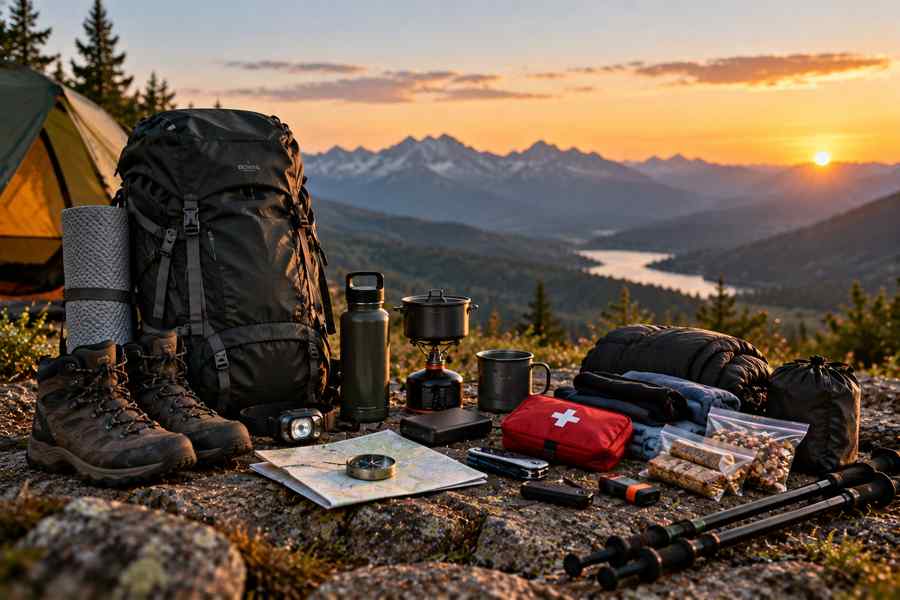
Your first trekking trip doesn’t require an expensive backpack full of specialized equipment. In fact, beginners often make the opposite mistake: carrying too much of the wrong stuff while forgetting a few items that can make a huge difference.
The goal isn’t to pack everything you own. It’s to carry the essentials that keep you safe, dry, warm, hydrated, and able to deal with unexpected problems.
Here’s what should be on your checklist before your first overnight trek or camping trip.
1. A Reliable Backpack
Choose a backpack that fits your body properly and has enough capacity for your trip.
For a short overnight trek, a roughly 30–50 litre pack is often sufficient depending on your tent, sleeping system, food, and clothing.
Don’t buy the biggest backpack you can find. More space often means you’re tempted to carry more unnecessary gear.
2. Proper Footwear
Your shoes are more important than most pieces of camping equipment.
Wear footwear with good grip and enough support for the terrain you’ll be walking on. Avoid taking brand-new shoes on a long trek. Give them several shorter walks first to identify rubbing or hot spots.
A blister halfway through a trek can turn a great trip into a miserable one.
3. Navigation
Never rely entirely on your phone.
Download your route for offline use before leaving and consider carrying a physical map or another backup navigation method when trekking in remote areas.
Your phone can lose signal, run out of battery, or become damaged.
Knowing where you are is more important than having the latest navigation app.
4. Headlamp
A headlamp is one of those items that seems unnecessary until darkness arrives.
It’s much more useful than a normal flashlight because it leaves both hands free for setting up your tent, cooking, walking, or handling gear.
Always carry spare batteries or make sure your rechargeable headlamp is fully charged.
5. Water and a Way to Treat It
Carry enough water for the route and know where your next reliable water source is.
If you’re going somewhere where natural water may be available, don’t automatically assume it is safe to drink. Carry an appropriate water filter, purification method, or other treatment system suited to your destination.
Water is heavy, so planning your supply before the trek is important.
6. Food With Enough Energy
Trekking burns more energy than a normal day of walking.
Choose food that is easy to carry, doesn’t spoil quickly, and provides a good combination of carbohydrates, fats, and protein.
Nuts, energy bars, dried fruit, sandwiches, and dehydrated meals can all be practical options depending on the length of your trip.
Don’t bring food that requires complicated preparation unless you’re comfortable cooking outdoors.
7. Weather-Appropriate Clothing
Don’t rely on a single thick jacket.
A layering system is generally more practical because you can add or remove clothing as conditions change.
Bring a waterproof outer layer if rain is possible, along with an extra pair of socks. Wet feet can quickly become uncomfortable and increase the risk of blisters.
And remember: mountain weather can change much faster than conditions at home.
8. Rain Protection
Even if the forecast looks clear, have a plan for rain.
Depending on your setup, this could mean a waterproof jacket, rain cover for your backpack, and a tent or shelter designed to handle the expected conditions.
Protect your sleeping bag and spare clothes from getting wet by storing them inside waterproof bags or dry bags.
9. First-Aid Kit
Your first-aid kit doesn’t need to look like a hospital.
For a basic trek, consider carrying items such as adhesive bandages, blister treatment, antiseptic wipes, medical tape, gauze, and any personal medication you normally need.
The most useful first-aid kit is one you actually know how to use.
10. Power Bank
Your phone may be your navigation device, camera, emergency contact, and source of weather information.
A power bank provides an important backup, particularly on longer trips.
Keep both your phone and power bank protected from rain and extreme conditions.
11. Fire and Cooking Equipment
If you plan to cook, carry the appropriate stove, fuel, lighter, or fire-starting equipment for your trip.
However, never assume that campfires are permitted. Many areas have restrictions, particularly during dry or high-risk periods.
A compact camping stove is often more practical than relying on an open fire.
12. Emergency Shelter
Your tent is your primary shelter, but consider what happens if it becomes damaged or unusable.
An emergency bivy, lightweight emergency blanket, or other suitable emergency shelter can provide valuable backup in unexpected situations.
You may never need it. That’s exactly the point.
13. Small Repair Kit
A few simple repair items can save a trip.
Carry some strong tape, cord, a few zip ties, and basic repair materials suitable for your equipment.
A broken backpack strap or damaged tent component doesn’t necessarily need to end your trip if you can make a temporary repair.
14. Toilet and Hygiene Supplies
Pack basic hygiene items appropriate for your destination.
Toilet paper, hand sanitizer, a small towel, and biodegradable soap can be useful, but follow the rules of the area you’re visiting.
If there are no toilets, learn how human waste must be handled before your trip. Different environments have different requirements.
15. A Simple Emergency Plan
This is the most important “item” that doesn’t fit inside your backpack.
Before leaving, tell someone where you’re going, what route you’re taking, and when you expect to return.
Know the emergency number or rescue procedure for the area you’re visiting.
If your plans change significantly, communicate that change when possible.
Don’t Pack Everything
One of the biggest beginner mistakes is confusing more gear with more safety.
Every extra item adds weight, and extra weight makes trekking harder.
Before putting something in your backpack, ask:
What problem does this solve?
If you can’t give a good answer, you probably don’t need it.
For your first trek, focus on the essentials: navigation, water, food, shelter, appropriate clothing, lighting, first aid, and communication.
Once you’ve completed a few trips, you’ll quickly learn which items you actually use and which ones simply travelled around in your backpack.
The best camping setup isn’t the one with the most equipment. It’s the one that gives you everything you need without making you carry everything you own.