

When preparing for your first trek, it’s easy to spend money on a tent, backpack, jacket, or other outdoor gear while treating footwear as an afterthought.
That can be a costly mistake.
Your feet are doing the most work during a trek. Every step carries your body over uneven ground, rocks, mud, slopes, and sometimes slippery surfaces. The right trekking shoe won’t make a difficult trail easy, but it can make the experience considerably safer and more comfortable.
You don’t necessarily need the most expensive pair on the market. What you need is footwear that matches the terrain, fits properly, and provides reliable grip and support.
1. Better Grip on Difficult Terrain
One of the biggest differences between ordinary shoes and trekking footwear is the outsole.
Trekking shoes are designed with tread patterns that provide better traction on uneven outdoor surfaces. This becomes particularly important when you’re walking over loose gravel, wet rocks, mud, roots, or steep sections of a trail.
Good grip doesn’t mean you can never slip. It simply gives your feet more traction when the surface isn’t predictable.
Before buying, look at the outsole rather than being impressed by the appearance of the shoe. Deep, well-designed lugs and a rubber compound suited to the terrain can make a significant difference.
2. Protection From Rocks and Uneven Ground
A trail isn’t a pavement.
Your feet may repeatedly land on stones, roots, sharp edges, and uneven surfaces. A quality trekking shoe generally provides more protection around the sole and upper than ordinary running or casual shoes.
A reasonably protective sole can also reduce the discomfort caused by repeatedly stepping on rocks.
This doesn’t mean you need extremely heavy boots. For many day hikes and well-maintained trails, a lighter hiking or trekking shoe can provide plenty of protection.
3. Stability When You’re Carrying a Backpack
Walking on uneven ground while carrying a backpack changes the way your body moves.
A well-fitting trekking shoe can provide a more stable platform and help your feet feel secure when you’re moving across uneven terrain.
Ankle support is often discussed as a major advantage of hiking boots, but it’s important not to assume that a high ankle automatically prevents injuries. Fit, traction, terrain, technique, and overall footwear design all matter.
Choose the amount of support based on the trail and your personal needs rather than simply choosing the tallest boot.
4. Better Comfort Over Long Distances
A shoe can feel comfortable when you try it for five minutes in a store and become uncomfortable after four hours on a trail.
During trekking, your feet experience thousands of steps. Small pressure points can turn into painful blisters surprisingly quickly.
A quality shoe should provide enough room for your toes, hold your heel securely, and avoid excessive pressure around the sides of your foot.
Your toes should not be jammed against the front of the shoe when walking downhill.
This is one reason you should always try trekking footwear while wearing the socks you plan to use on your trek.
5. Protection From Water and Mud
Depending on where you trek, your shoes may encounter rain, wet grass, shallow streams, or muddy trails.
Water-resistant or waterproof footwear can be useful in wet conditions, but waterproof doesn’t automatically mean better.
Waterproof membranes can reduce breathability, which may make your feet warmer in hot conditions. If you’re mostly trekking in dry, warm weather, a breathable shoe may actually be more comfortable.
Think about the environment you’ll be trekking in rather than choosing footwear based on one feature.
6. Durability Matters
Cheap footwear can sometimes work perfectly well for a short walk, but trekking puts significantly more stress on shoes.
Repeated contact with rocks, dirt, mud, and uneven surfaces can quickly expose weaknesses in poorly constructed footwear.
A quality trekking shoe typically uses more durable materials and construction in areas that experience heavy wear, particularly around the outsole, toe, heel, and stitching.
That doesn’t mean every expensive shoe will last longer. Price alone isn’t a measure of quality.
Look at the construction, outsole, materials, fit, and reputation of the specific model.
7. The Most Expensive Shoe Isn’t Necessarily the Right Shoe
This is important for beginners.
You don’t need a ₹20,000 pair of trekking shoes to complete a weekend trek.
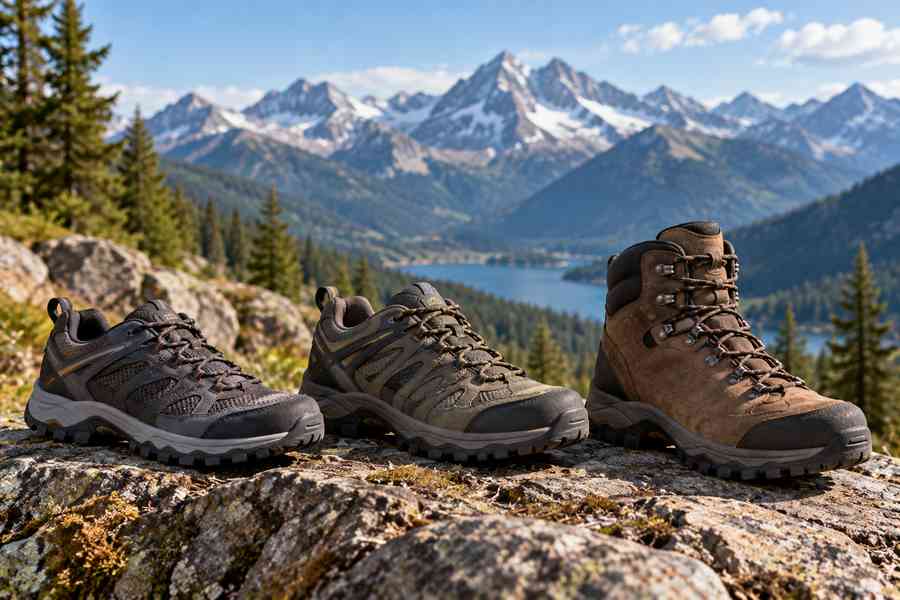
If you’re walking on relatively easy, maintained trails, a good pair of hiking shoes may be more practical than heavy mountaineering boots.
On the other hand, demanding terrain, heavy loads, cold conditions, or frequent multi-day trekking may justify more specialized footwear.
Choose according to the trail — not the price tag.
8. Always Break Them In Before a Trek
Never make your first long trek the first time you wear your new shoes.
Wear them around the house first, then take them on shorter walks. Pay attention to rubbing, heel movement, toe pressure, and hot spots.
If something feels wrong after a few short walks, it probably won’t magically become comfortable on a 15-kilometre trail.
Your footwear should feel familiar before you take it into the mountains.
What Should You Look For?
Before buying a trekking shoe, check these basics:
- Good outsole traction
- Secure heel fit
- Enough room for your toes
- Comfortable cushioning
- Appropriate protection for the terrain
- Breathability suitable for your climate
- Water resistance if you actually need it
- Durable construction
- A weight you’re comfortable carrying
Most importantly, fit comes first.
A technically impressive shoe that doesn’t fit your feet is still the wrong shoe.
The Bottom Line
A quality trekking shoe isn’t about looking like an experienced hiker. It’s about giving your feet the protection, traction, stability, and comfort they need to handle the trail.
You don’t have to buy the most expensive footwear available. Instead, understand where you’ll be trekking, what conditions you’ll encounter, and how much distance you’ll cover.
Spend your money where it matters, find a shoe that fits properly, break it in before your trip, and let your feet do what they came to do — carry you to the end of the trail.