



Planning your first trek usually starts with the obvious things: a backpack, trekking shoes, clothes, food, water, and perhaps a tent.
But some of the most useful pieces of trekking gear are the things beginners don’t think about until they actually need them.
A small item weighing a few hundred grams can sometimes make a much bigger difference than an expensive piece of equipment. Here are seven things worth checking before you leave for your first trek.
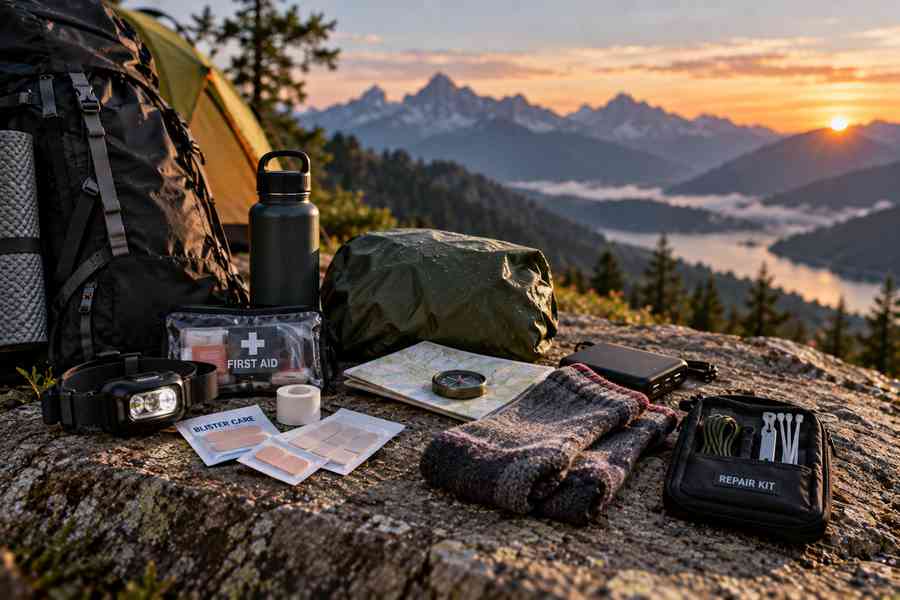
1. A Headlamp
Many first-time trekkers pack a flashlight or simply assume they’ll use their phone’s torch.
That’s fine until you need both hands.
Whether you’re setting up a tent after sunset, looking for something inside your backpack, walking to a campsite bathroom, or dealing with an unexpected delay, a headlamp is much more practical.
Keep it somewhere easily accessible rather than buried at the bottom of your backpack.
And don’t forget to charge it before leaving or carry spare batteries if it uses them.
2. Blister Protection
A pair of good trekking shoes doesn’t guarantee that you won’t get blisters.
Long distances, heat, moisture, unfamiliar footwear, and repeated friction can all cause problems.
Carry a small blister-care kit with items such as blister plasters, medical tape, and regular adhesive bandages.
More importantly, pay attention to your feet during the trek. If you notice a hot spot developing, deal with it early.
Ignoring a small irritation for several kilometres can turn it into a painful blister that affects the rest of your trip.
3. A Waterproof Way to Protect Your Gear
A rain jacket protects you, but what protects the things inside your backpack?
A sudden shower can leave your spare clothes, sleeping bag, electronics, and food wet even if your backpack has some water resistance.
Use waterproof dry bags, pack liners, or appropriately sized waterproof pouches for important items.
You don’t necessarily need to make every item waterproof. Prioritize things that become difficult or dangerous to use when wet, especially your sleeping gear, electronics, clothing, and important documents.
4. Offline Navigation
Your phone is an incredibly useful trekking tool, but it shouldn’t be your only navigation plan.
Download your route before leaving because mobile coverage can disappear quickly in remote areas.
Also consider carrying a physical map or another suitable backup when trekking somewhere unfamiliar.
Don’t wait until you’re lost to discover that the map on your phone requires an internet connection.
Before starting the trek, learn how to use the navigation system you’re carrying. A backup is only useful if you know how to use it.
5. Extra Socks
Extra socks take up very little space but can make a surprisingly big difference.
If your socks become wet from rain, sweat, or crossing a stream, changing into a dry pair can immediately improve comfort.
Wet socks also increase friction and can contribute to blisters.
Keep your spare pair in a waterproof bag rather than loose inside your backpack.
For a longer trek, the number of spare pairs you need will depend on the conditions, but having at least one dry backup is a simple precaution for an overnight trip.
6. A Small Repair Kit
Outdoor equipment can fail.
A backpack strap can loosen. A shoelace can break. A tent component can become damaged. A buckle can snap.
You don’t need to carry a full toolbox.
A few lightweight items such as strong tape, cord, zip ties, and basic repair materials can help you make temporary fixes and continue your trip.
The important thing is to pack items that match the equipment you’re actually carrying.
7. A Power Bank
If your phone is being used for navigation, emergency communication, weather updates, and photography, its battery can disappear much faster than expected.
A compact power bank provides an additional layer of security.
Keep your phone and power bank protected from moisture, and start your trek with both fully charged.
Don’t depend entirely on electronics, though. Your power bank is a backup — not a replacement for basic preparation and navigation skills.
Don’t Confuse “More Gear” With Better Preparation
One of the biggest mistakes beginners make is overpacking.
After reading several gear lists, it’s easy to end up carrying equipment that sounds useful but has little practical value for your particular trek.
Instead, ask a simple question before adding something to your backpack:
“What problem does this solve?”
If you have a clear answer, consider whether the item is worth its weight. If you can’t explain why you need it, you probably don’t need to carry it.
Your gear should reflect the trek you’re actually doing.
A short, well-maintained day hike requires very different equipment from a remote multi-day mountain trek.
The Small Things Often Matter Most
The most overlooked gear isn’t necessarily the most expensive.
A headlamp, dry socks, blister protection, waterproof storage, and a simple repair kit may seem insignificant when you’re packing at home. They become considerably more valuable when you’re tired, wet, or several kilometres from the nearest road.
Before your first trek, don’t just ask yourself, “Do I have the big things?”
Ask:
“What happens if it rains? What if it gets dark? What if my phone dies? What if my feet start hurting? What if something breaks?”
Preparing for those small problems is what turns a collection of camping gear into a properly planned trekking kit.